What to wear snowmobiling depends on one question most gear guides skip: what does your tour operator lend you? On almost every guided ride the operator hands out an insulated overall, boots, gloves and a helmet, so your job is the layers underneath. This guide covers what the operator supplies in each destination, how to layer under the suit, how to protect hands, face and feet, and how cold is too cold.
What do you wear snowmobiling on a guided tour?
Wear thermal base layers top and bottom, a wool or fleece mid layer and wool socks, then put on the overall, boots, gloves, balaclava and helmet the operator lends.
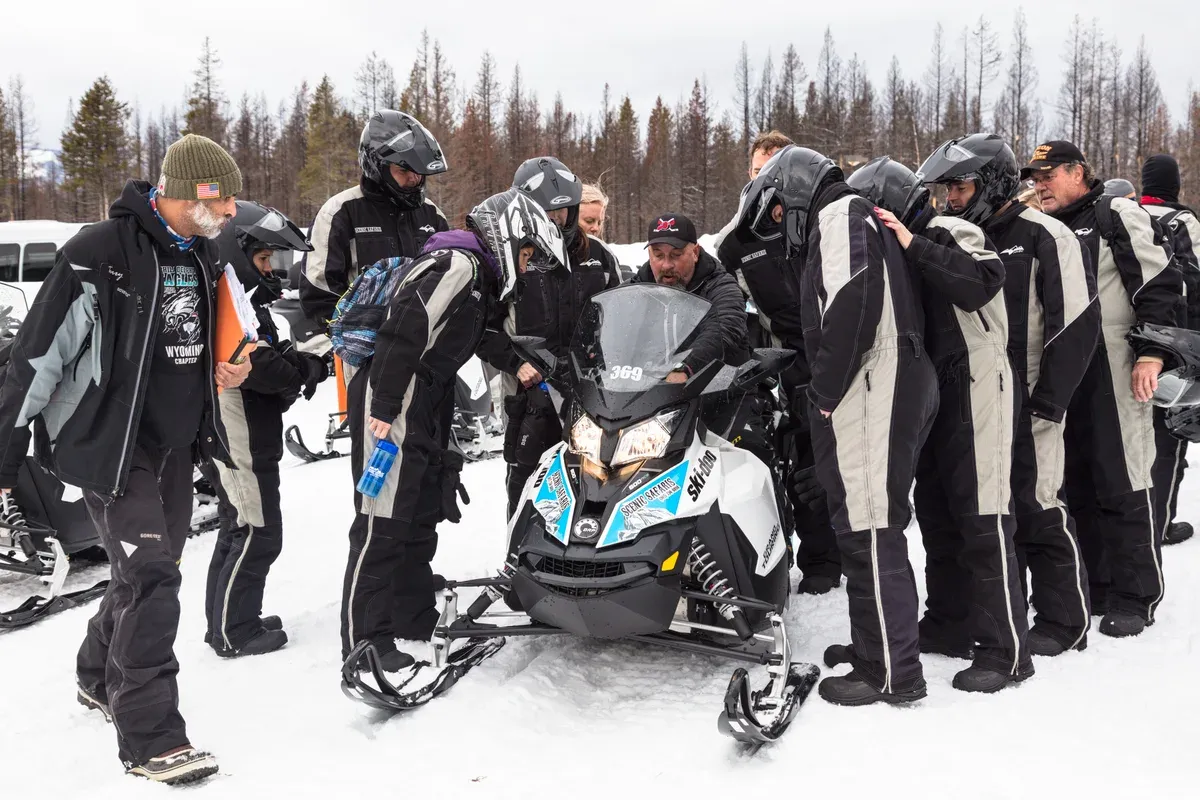
That is the standard kit on the Rovaniemi snowmobile tours and across Finnish and Swedish Lapland: thermal overall, boots, gloves, balaclava and helmet come with the tour, and you keep your own base layers on underneath. The supplied suit works with your layers, not instead of them. Add a warm hat for under the helmet and a phone you can secure in a zipped pocket, since gloves make dropped phones easy.
What the operator lends, by destination
Almost every tour on this site supplies a full outer suit, so the kit you pack is mostly base layers and socks. The exceptions are the one-hour Yellowknife ride, the Chena Lakes tour near Fairbanks and some Zakopane operators.
This table compares the winter clothing each operator supplies on the snowmobile tours compared on this site with what you should bring yourself to wear underneath or alongside it.
| Destination | Operator supplies | You bring |
|---|---|---|
| Rovaniemi, Levi, Saariselkä | Thermal overall, boots, gloves, balaclava, helmet | Thermal base layers, wool mid layer, thick socks. Take the balaclava seriously on open tundra |
| Kiruna and Abisko | Thermal overall, boots, gloves, balaclava, helmet on every tour | Base layers, wool mid layer, a camera you can work in gloves |
| Tromsø and Alta | Full thermal suit, boots, gloves, balaclava, helmet | Heavy base layers, spare socks, a face covering under the balaclava on the coldest departures |
| Svalbard | Expedition kit: insulated suit, boots, mitts, balaclava, helmet, goggles | Heavy base layers top and bottom, a camera you can use in mitts |
| Langjökull, Iceland | Overall, boots, gloves, balaclava, helmet at the ice camp | A warm layer even in July, a waterproof outer layer |
| Zakopane | Helmet and overall | Your own gloves, as some operators supply only a helmet. Swimwear for thermal bath day trips |
| Whistler | Helmet, gloves, goggles. Blackcomb Snowmobile also lends jacket, snow pants and boots | A waterproof outer layer, as coastal snow is wet. A dry spare pair of gloves |
| Quebec City | Winter suit, boots, helmet, gloves | Base layers, wool socks, a warm hat for under the helmet |
| Yellowknife | Machine and helmet. No clothing on the 1-hour ride | Parka, snow pants, insulated boots and mitts, or hire them in town before the day |
| Fairbanks | Varies by tour: boots, bibs or suit, mitts and helmet near North Pole and in Goldstream Valley. Helmet, mittens and goggles only at Chena Lakes | Heavy base layers top and bottom, a face covering. A full cold-weather outfit for the Chena Lakes tour |
| Anchorage and Jackson Hole | Suit, boots, helmet, goggles | Base layers and two pairs of wool socks |
| Lake Tahoe | Suit, helmet, gloves | Warm layers and winter boots (not ski boots), as the summit is far colder than the lake shore |
When a listing does not state the clothing, assume you need your own boots and gloves, and ask. The one-hour Yellowknife ride states plainly that winter clothing is not supplied, while the 1.5-hour Yellowknife tour includes pickup and a meal. In a town that hits minus 30, that difference matters more than the $17 price gap.
How to layer under a snowmobile suit
Use three layers: a thin moisture-wicking base layer of merino or polyester, an insulating fleece or thick merino mid layer, and the windproof suit on top.
Ski-Doo describes the same system for its own riders. The base layer wicks sweat away from the skin, the mid layer traps an air pocket that keeps you warm, and the outer shell blocks the wind. Base layer bottoms are what to wear under snowmobile pants or an overall. Keep the mid layer slightly looser than the base layer so it traps air, and avoid a bulky ski jacket under the overall, because the suit has to close and you need to move your arms on the handlebars.
This table lists each clothing layer for a guided snowmobile tour, the material that works, and whether the operator normally supplies it.
| Layer | What works | Supplied on tour? |
|---|---|---|
| Base layer, top and bottom | Merino wool or synthetic thermal underwear, close-fitting | No, bring your own |
| Mid layer | Fleece or thick merino, slightly looser | No, bring your own |
| Outer shell | Insulated windproof overall or suit | Yes on most tours |
| Socks | Wool or wool blend, two pairs where it is very cold | No, bring your own |
| Boots | Insulated winter boots | Yes on most Arctic tours |
| Gloves or mitts | Insulated snowmobile gloves or mitts | Usually, bring a spare pair |
| Balaclava and helmet | Thin balaclava under a full-face helmet | Yes on most tours |
Source: Ski-Doo: what to wear on a trail snowmobile, RefrigiWear.
Do you need snow pants for snowmobiling?
Not on most guided tours, because the operator lends a one-piece overall or a suit with pants, but you do on a ride that supplies no clothing.
The one-hour ride in Yellowknife and the Chena Lakes tour near Fairbanks are the clear cases where you need your own parka, snow pants and insulated boots. In Whistler, Blackcomb Snowmobile lends jacket, snow pants and boots if you arrive without them. On self-drive rentals in the US, gear is usually an extra: Mt. Hood Outfitters charges $50 for a mono-suit and boots, and Northeast Snowmobile Rentals charges $35 for a full suit and $20 for boots.
Gloves, face and feet
Hands, face and feet get cold first on a snowmobile, so pack a spare pair of gloves, a thin balaclava or face covering and wool socks even when the operator supplies the main kit.
- Hands. Your hands sit on the handlebars in the wind for the whole ride. Bring a dry spare pair of gloves, especially in Whistler where the snow is wet.
- Face. A balaclava under the helmet covers the skin the wind reaches first. In Fairbanks and Alta add your own face covering under the supplied one.
- Eyes. A full-face helmet visor or goggles. The Whistler operators supply goggles, elsewhere bring goggles or sunglasses if the listing does not include them.
- Feet. Wool socks, two pairs where it is very cold, inside the operator's insulated boots. Ski boots are the wrong shape for a snowmobile footrest.
What is too cold for snowmobiling?
There is no single cut-off, but wind chill sets the limit: at 0°F (-18°C) with a 15 mph wind the wind chill is -19°F (-28°C), and exposed skin can freeze in 30 minutes.
That figure comes from the National Weather Service wind chill chart, and a snowmobile makes its own wind on top of the weather. Operators decide on the day. Interior Alaska regularly sits below minus 30 in January, so Fairbanks rides are shorter and the clothing heavier. The 1-hour tour near North Pole includes a heated helmet, jacket, bibs and boots. Tours are also postponed or shortened when conditions are unsafe, which is normal for the activity.
Source: National Weather Service.
What not to wear snowmobiling
Leave cotton layers and ski boots at home, because cotton holds sweat and chills you, and ski boots are the wrong shape for a snowmobile footrest.
Cotton layers are on the leave-at-home list for every destination from Lapland to Whistler, where wet coastal snow soaks through them fast. Jeans under the overall are the same problem. Keep a dry change of clothes in the car or the bus for after the ride, and swimwear if your Zakopane day trip includes the thermal baths.
Next, see snowmobiling cost for what each tour includes in its price, or browse all snowmobile tours by destination on snowmobilerides.com.
FAQ
What do people wear when snowmobiling?
On a guided tour, an operator-issued insulated overall, boots, gloves, balaclava and helmet over their own thermal base layers, a fleece or wool mid layer and wool socks.
What is the best clothing for snowmobiling?
A merino or synthetic base layer, a fleece mid layer and a windproof insulated suit on top. Avoid cotton, which holds moisture and chills you.
Do you need snow pants for snowmobiling?
Not on most guided tours, because the overall or suit covers your legs. You need your own on rides that supply no clothing, such as the one-hour Yellowknife ride and the Chena Lakes tour near Fairbanks.
Can you wear jeans snowmobiling?
Not as your only layer. Jeans are cotton, they hold moisture and get cold fast. Wear thermal leggings or base layer bottoms under the supplied overall instead.
What should I wear snowmobiling in Iceland?
Thermal base layers and a warm mid layer, even in summer, plus a waterproof outer layer. The ice camp on Langjökull supplies the overall, boots, gloves, balaclava and helmet.